Physiotherapy
Physiotherapy at Home for Ageing Parents
Support mobility goals without inventing a treatment plan
How families plan home physiotherapy after illness or surgery — goals, sessions, safety and when to ask a clinician.
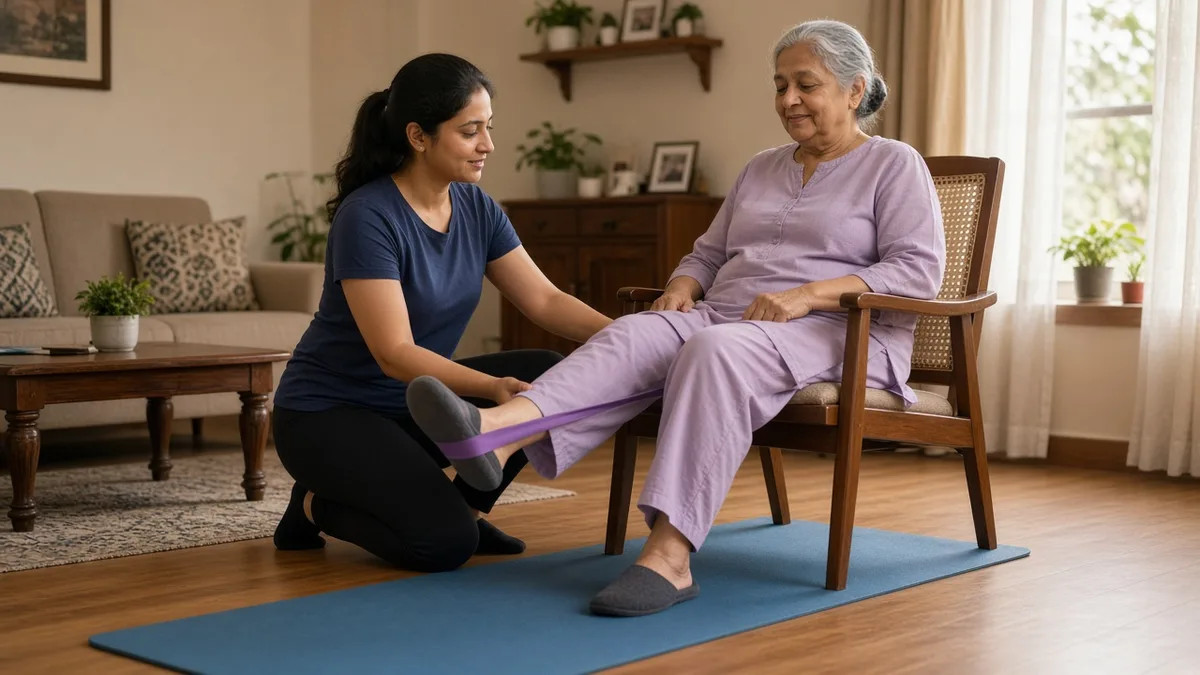
Home physiotherapy can help older adults regain strength, confidence and daily function after a fall, joint replacement, long hospital stay or a period of bed rest. Done well, sessions fit the living room, the corridor and the bathroom threshold — the places parents actually need to move. Done poorly, families chase viral exercise videos and hope for the best.
This guide is for adult children coordinating support in India, including from abroad. It is not a treatment plan and not medical advice. Care4Parents does not assign physiotherapists or prescribe exercises.
Decide what “better” means in daily life
Before the first session, write three concrete goals with your parent and their doctor or physiotherapist: walk to the bathroom without fear, climb the six steps to the verandah, sit-to-stand from the dining chair five times, return to a short park walk. Vague goals (“get stronger”) make progress hard to see and easy to abandon.
Share discharge notes, imaging summaries and current pain levels with the therapist. Mention cardiac history, osteoporosis, recent stitches and any weight-bearing limits. Surprises mid-session are unsafe.
What home sessions usually involve
A licensed physiotherapist assesses posture, balance, joint range and walking pattern, then sets exercises matched to that assessment. Sessions may include supervised practice, education for the attendant or family, and a short home programme between visits.
Your job as family is logistics: clear floor space, non-slip footwear, a stable chair, water nearby, and a quiet stretch of time without festival guests in the same room. Filming a set of exercises for later practice can help — only if the therapist agrees and your parent consents.
Do not stack multiple “healers” with conflicting instructions. One coherent plan beats three contradictory ones.
Safety and red flags
Stop and seek clinical advice if chest pain, sudden breathlessness, new neurological weakness, fainting, or sharp unexplained pain appears during or after exercise. Mild muscle ache can be normal; crushing pain and confusion are not DIY territory.
Falls risk rises when rugs slide, wires cross walking paths, or night lighting is poor. Pair physiotherapy goals with simple home checks — see our related thoughts on fall-aware homes in the blog when you are ready.
After stroke or major surgery, start only with clinician clearance. Recovery timelines vary; comparing your parent to a neighbour’s uncle on WhatsApp rarely helps.
Supporting from another city or country
NRIs can fund sessions, keep a shared log of dates and what was practised, and join a monthly video call with the therapist if everyone agrees. Avoid coaching parents through aggressive progressions from a YouTube tab at midnight in another time zone.
Ask the therapist how many visits per week make sense for the current phase, what the attendant may cue safely, and when a clinic-based session (parallel bars, specialised equipment) would be better than home-only work.
In smaller towns, the pool of home therapists may be thin. Families sometimes combine a periodic trip to a city clinic with home practice sheets. That hybrid is fine when the same professional owns the plan. What fails is layering three unrelated “experts” without a shared record of restrictions.
Track soft signals between visits: more willingness to walk to the balcony, less fear of the bathroom at night, or renewed refusal to stand. Bring those observations to the next session instead of only asking “are we done yet?” Recovery plateaus are common; clinicians decide whether to hold, progress or reassess underlying issues.
Closing
Home physiotherapy succeeds when goals are daily and specific, the professional owns the plan, and the family owns the environment and follow-through. Care4Parents publishes guides only — we do not provide treatment plans or book therapists. Confirm every programme with a licensed clinician.
Common questions
- Is this a physiotherapy treatment plan?
- No. This is general family information. Exercise plans and progressions must come from a licensed physiotherapist or the treating clinician.
- When should we ask a clinician before starting home physio?
- After recent surgery, fracture, stroke, unexplained pain, dizziness, chest symptoms or any red-flag the doctor mentioned. Confirm clearance before home sessions begin.